On this page
THE BIG IDEAS
- Antares is a bright red-supergiant landmark.
- Seasonal placement and local weather are separate constraints.
- A broad view makes the curved pattern easier to follow.
A distinctive curve in the southern sky
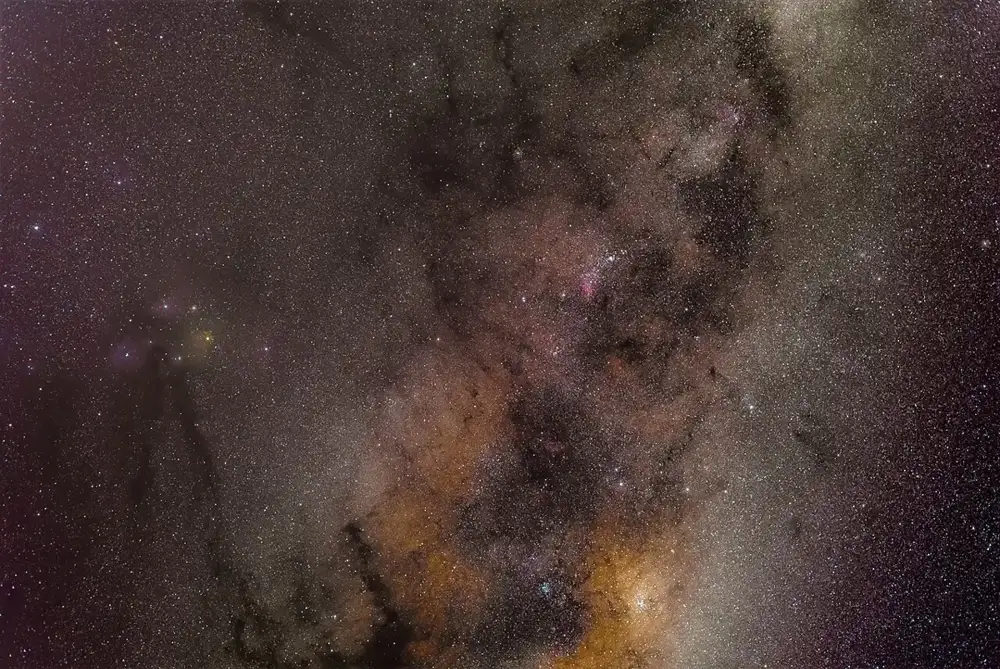
Scorpius is a large constellation with a curved tail and the bright reddish star Antares near its heart. It is a useful target for learning how a star chart connects a broad pattern to smaller binocular fields. Unlike a compact cluster, the whole constellation needs a wide naked-eye view.
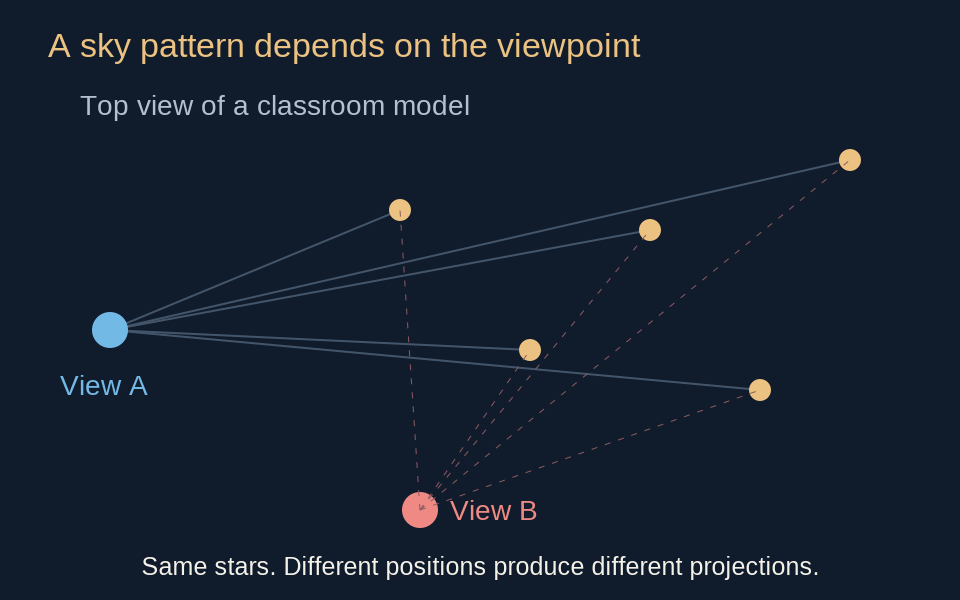
Its stars are not all at one distance. The outline is a pattern seen from Earth, so joining them in a drawing does not imply that a physical scorpion-shaped structure exists in space.
Use season and time together
Scorpius is prominent during northern summer evenings. From Karnataka’s low northern latitude, much of the pattern can rise well above the southern horizon when suitably timed. Local cloud and monsoon weather can still make an otherwise well-placed target unavailable.
Check a current local chart and choose a time when the tail is not hidden behind trees. A clear night in another part of the season may suit your site better than a nominal peak month. Never substitute an astronomical visibility prediction for a weather forecast.
Begin with Antares
Find the bright warm-coloured star and compare the neighbouring stars with your chart. Antares is a red supergiant, but its observed colour may be muted rather than intensely red. Low altitude can exaggerate colour effects and twinkling, so use a higher view when possible.
Do not confuse it with Mars merely because both can look reddish. Planets change position against the constellations. A dated map distinguishes them more reliably than colour alone.
Follow the tail slowly
Move through the curved line of stars with your eyes before raising binoculars. If you jump straight into a narrow optical field, it is easy to lose the larger pattern. Near the tail are rich star fields and clusters that can reward a broad binocular sweep.
Keep the binoculars pointed well away from any daytime Sun and use them only from a stable position. At night, stop walking before looking. A seated view often reveals more than a hurried standing sweep.
Make a horizon record
Draw the visible constellation and mark any portion hidden by a tree or building. Write the observing time and whether Antares appeared steady or strongly twinkling. Compare the drawing with a chart afterwards to identify missed stars. Repeating the exercise at a different hour shows how a target moves through your local obstacles. It also helps you choose a better site for a future session without treating an incomplete view as a failure.
PAUSE AND THINK
Can an object be astronomically well placed but impossible to observe that night?
Explore the answer
Yes. Clouds, haze or local obstructions can hide it even when it is above the horizon in darkness.